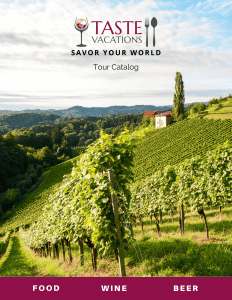
There’s a version of Tuscany that many travelers never find. Most people know a lot about Tuscany. But here’s what it actually feels like to be there in September.
The cypress-lined road climbing to a farmhouse. The vineyard at golden hour. The hilltop town with the view that makes you put your phone down. These images exist because they’re real — Tuscany is genuinely, unreasonably beautiful — but they’ve been photographed so many times that somewhere along the way they stopped feeling like a place and started feeling like a screensaver.
We’d like to offer you a different Tuscany. Not a hidden one — there are no secrets in a region this beloved. But a version that most travelers miss because they visit at another time, in a different way, or in the wrong company.
September Is When Tuscany Becomes Itself Again
The busloads thin in September. The French families and the American honeymooners and the tour groups counting heads have largely gone home. And what’s left is something the summer crowds inadvertently concealed: a region that is genuinely, quietly alive in a way that has nothing to do with tourism.
September is harvest season. The vineyards that looked like pastoral decoration all summer are suddenly the center of everything. Families are out in the rows. The air near the wineries carries something you can’t quite describe — fermentation starting somewhere nearby, earth and grape and something almost sweet. The people you encounter at the cellars aren’t in hospitality mode. They’re in the middle of the most important weeks of their year, and when they pour you a glass and tell you about what’s coming, they mean it.
The olive trees are still silver-green in the slanted afternoon light, a few weeks from their own harvest. The sunflower fields are done, their stalks dried and leaning, but the landscape they leave behind is its own kind of beauty — more austere, more honest. The tomatoes at the farm stands are extraordinary. The pecorino is at its best.
This is Tuscany operating at full capacity, for itself, for reasons that have nothing to do with your visit. You just get to be in the middle of it.
The Villages That Don’t Need Your Attention
 A lot of Tuscany’s famous towns have learned, over centuries, how to handle tourists. San Gimignano is magnificent — the medieval towers rising above the valley are genuinely astonishing — but the main street knows exactly what it’s doing. The gelaterias are optimized. The souvenir economy is finely tuned.
This isn’t a criticism. It’s just useful to know that the more famous a Tuscan town is, the more it has organized itself around the experience of being visited.
What’s interesting is how many towns haven’t. Radda in Chianti, perched on its ridge with archaeological traces going back 4,000 years, feels like a village that would exist in exactly this form regardless of whether you showed up. Montepulciano — steep and beautiful — is famous for its wine but not famous for being famous, which is a meaningful distinction. Spello, officially one of the most beautiful villages in Italy and largely unknown to anyone without a reason to be looking for it, has cobblestones worn smooth by genuine centuries of use, not footfall optimization.
The feeling of walking through these places is different. You’re not being managed. The bar in the piazza was there for the locals before you arrived and will be there after you leave. The man arguing about football at the corner table is not a performance.
What the Food Is Actually Doing
 Tuscan food has a reputation for simplicity that is sometimes used to undersell it. ‘Simple ingredients, simply prepared’ — which is true, but misses why it works.
What Tuscan food is actually doing is trusting its ingredients completely. The bread is unsalted and stale-looking and somehow perfect with good olive oil. The ribollita — a thick, slow-cooked bread-and-vegetable soup — is the kind of dish that would be uninspiring at a restaurant that didn’t care and transcendent at one that did. The bistecca fiorentina is just steak and fire and salt, which sounds like nothing and tastes like everything.
The truffle, though, is where the philosophy becomes almost mystical.
 The Tuscan truffle is not a garnish or an affectation. It is an underground thing found by a dog following an instinct, dug from the roots of an oak tree in a forest that looks ordinary until it isn’t. Following a truffle hunter through the woods — watching a dog work, understanding that this skill has been passed down through families, that the location of a good truffle spot is guarded like family property — changes how you feel about what ends up on your plate. It is one of the more genuinely strange and wonderful food experiences available in the world, and it happens in forests that most tourists drive past without slowing down.
Chianti from Inside a Villa
There’s something about staying in the Chianti countryside — actually staying in it, waking up to vineyards outside the window rather than a hotel room in a city — that changes your relationship with what you’re tasting.
The geography of Chianti Classico is one of the most beautiful in the wine world: the hills, the elevations, the way altitude and aspect and drainage combine to create the specific character of a Sangiovese from this valley versus the next one. None of that is abstract when you ate dinner under the pergola last night and walked through the vineyard this morning and the people who made this wine live five kilometers away.
Wine tourism, in a place like this, isn’t really tourism at all. It’s just paying attention to where you are.
The Pace That Changes You
 The reason people come back from Tuscany — from a real trip in Tuscany, not a rushed one — looking subtly different isn’t the sights. It’s the pace.
Tuscany doesn’t reward hurrying. The towns are arranged on hilltops specifically to slow you down. The meals last as long as they last. The afternoon light at 4 PM, when the shadows start to go long across the fields, is doing something to your nervous system whether you intend it to or not. You stop checking the time. You order a second glass of wine because the conversation is still going. You find yourself genuinely interested in what the winemaker is saying about the difference between clay soil and limestone.
This doesn’t happen on a packed itinerary. It doesn’t happen in large groups. It happens when the travel has been designed with enough space for the place to actually reach you.
A Note on September 2026
We have one small-group departure to Tuscany this September — 7 days, a maximum of 8 travelers, starting in Florence and working through the Chianti hills, the Val d’Orcia, Cortona, and Umbria. Truffle hunting in the forest. Cooking class at a stone farmhouse. A pecorino farm in Pienza. Wineries that welcome a group of eight the way they would welcome friends.
It’s the version of Tuscany we’ve been describing. And there are a handful of spots left.
→ See the full itinerary and dates: Tuscany Food & Wine Tour, September 10–16, 2026