Category

Food

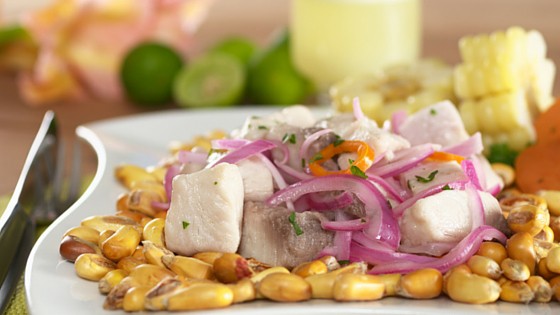
WHO MAKES IT BEST? A CEVICHE COMPARISON

Who Makes It Best? A Ceviche Comparison

By Food No Comments

The origin of ceviche has been much debated. Though most historians would agree that the seafood salad dish is from Peru, rather than Ecuador, it is unclear how it came about in the land of the Incas. One theory suggests that the Spanish brought it over along with their European citrus fruits like limes. Another theory is that Polynesian travelers brought over their tradition of marinating fish in citrus fruit juices in pre-Columbian times. And yet another suggests that ceviche was invented for a great Incan emperor so that he could still eat fresh fish while living in Cuzco by having it marinated in juices before being carried via relay runners to his throne.

Regardless of where it originated, it has certainly spread throughout Latin America picking up little variations depending on the most popular seafood in the local area and other culinary customs. Each country, of course, claims to have the best ceviche.

Peruvian Ceviche consists of fresh fish placed in Peruvian lemon juice (highly acidic green lemons) for only a few minutes and served with onions, garlic, and Peruvian chillies. It is often served with sweet potato or plantain chips.

Ecuadorian Ceviche is typically made with a tangy tomato sauce with lime and salt and often includes shrimp as the main type of seafood. It is usually served in a bowl with toasted corn kernels or plantain chips.

Costa Rica Ceviche is composed of fresh seafood, bell peppers, onions, vinegar, and lime juice and often includes white sea bass as the main type of seafood.

Mexican Ceviche can be served “wet” or “dry” where the “dry” is just the contents drained of the excess juices. It usually consists mainly of shrimp and tilapia and is typically served with tortilla chips or inside tacos.

There are, of course, other variations of ceviche that can be found just about anywhere fresh fish and seafood are caught directly from the water. Though there is no clear winner as to which country has the best ceviche, we try to make it a habit to taste test this delicious dish whenever we have the chance.

What People Eat For Breakfast Around the World

7 Delightful Breakfasts From Around the World

By Food, Taste Vacations No Comments

Breakfast is the most important meal of the day. But what a person has for breakfast can vary greatly depending on what part of the world they are coming from.  I, for one, am in the camp of eating anything for breakfast – eggs, bacon, cold pizza, grilled cheese, leftover pasta, anything!

Typically, an American breakfast consists of eggs, bacon or sausage, toast or pancakes, hash browns, and a cup of coffee.  Or for a lighter fare, some yogurt with fruit and granola.  This all sounds tasty but I’m on the hunt for a more adventurous morning meal, which is why I’ve compiled a list of seven delightful breakfasts from around the globe:

Typical Malaysian Breakfast

Roti Canai is a flatbread that is left chewy in the center but crispy around the edges can be stuffed with egg, chicken, jam or banana. The roti canai featured in the image above is served with curries and sambal.  I crave savory foods (rather than sweet) so this breakfast suits me quite well.

Typical Peruvian Breakfast

Peruvian Breakfast

Image Source: Ang (Flickr)

In Peru, a typical breakfast may consist of triangular-shaped rolls, roasted wheat kernels, mote (boiled dried corn), and tea or coffee. The pictured roll looks quite tasty, don’t you think?

Typical Australian Breakfast

Typical Australian Breakfast - Vegemite

Image Source: Janeen (Flickr)

A typical Australian breakfast consists of fruit, eggs, and toast with Vegemite – a dark brown salty food paste made from various vegetables and spices. I know vegemite has gotten a bad rap of being rather bizarre outside of Australia, but I would still be curious to try it!

Typical Thai Breakfast

Typical Thai Breakfast Jok

Image Source: Amber Hoffman(Flickr)

Jok is a thick rice porridge usually enriched with pork, chicken, or shrimp and is typically eaten for breakfast in Thailand.  The jok featured in the image above is served with ground pork and topped with ginger, scallions, and chiles. Comfort food + a little spice = perfection.

Typical Morrocan Breakfast

Typical Morrocan Breakfast Bessara

Image Source: Par Taste

The typical Morrocan breakfast consists of beghrir which are small, spongy pancakes, and bessara, which is dried fava beans stewed with cumin and paprika. Seems like a delicious way to start your day.

Typical Italian Breakfast

Typical Italian Breakfast

Image Source: Stephen Rees (Flickr)

Caffellate or cappuccino are the main focus in Italian breakfasts, usually served with bread, butter, jam, or even cake. As an avid coffee drinker, I can’t say I mind the emphasis on a nice hot beverage.

Typical Nigerian Breakfast

In Nigeria, you can find fried plantains, a tomato-based stew, and baked chicken for breakfast.  A Nigerian breakfast looks rather like an American lunch or dinner – and I’m definitely okay with that!

With so many delightful options, you may want to consider adding a few more destinations to your bucket list based on breakfast alone!

Living in the Moment: the South American Attitude Towards Life

By Food, Taste Vacations, Wine No Comments

Traveling through Chile & Argentina over the past few years, I’m always struck by the beauty, cuisine, and, of course, wines of these charming countries.  But what has had the biggest impact on me is the South American attitude towards life. From my perspective, South Americans enjoy focusing on living in the moment rather than have their lives be dictated by a clock.

As a North American that used to be in the heart of the hustle and bustle of a large metropolis, working a fast-paced, high-stress job, and being one of those people who never used all of my given vacation days, I can wholeheartedly appreciate this kind of life philosophy. Us northerners can take a page from our southern friends and take a step back to enjoy each experience to the fullest. Now that I have my dream job where I get to split my time between the marketing of Taste Vacations and Zephyr Adventures, and guiding tours all over the globe, I find myself trying to help our guests to do just that.

There have been many times, especially at the beginning of a trip, where I’ve needed to gently remind a guest that vacation isn’t necessarily about getting from point A to point B so that you can check it off your list. But it is rather about the journey and experiences that bring you from one destination to the next, even if some of those experiences were unplanned. In fact, it’s the unplanned ones that usually end up creating the best memories!

But there are two sides to every coin. As a travel guide leading a tour through South America, it can be tricky to stay on schedule and make sure that you are delivering on the promises that the tour itinerary has laid out. Things happen at a slower pace in Chile & Argentina, which means we have to sometimes pad our itineraries to account for delays in crossing borders, the time it takes to get a lunch bill paid at a small restaurant, hotel check-in processes, etc. Though we try to predict where these delays can happen and plan accordingly, we can’t always foresee the hiccups that arise.

In my mind, a perfect solution would be to meld the two approaches together. At Taste Vacations, we actively try to blend the efficient and detail-oriented processes of North America with the South American ability to slow things down and truly savor what life has to offer. I encourage you to try to do the same, wherever your next vacation may be.

The History of Pesto recipe

The History of Pesto – Plus a No-fail, Easy Recipe

By Food, Taste Vacations No Comments

Pesto, also known as battuto Genovese, is a simple, yet superb sauce found in traditional Italian cuisine. The first written record of a pesto recipe dates back to the late 1800s, but is thought to have originated during the 16th century in Genoa, in Italy’s northern region. Traditionally, it is made up of crushed garlic, fresh basil, pine nuts, Parmesan Reggiano, and extra-virgin olive oil. The word pesto refers to how the sauce is authentically prepared with a mortar and pestle. Both pesto and pestle are derived from the word pestare which means to grind or crush.

Though pesto seems to have had a long history, moretum, the sauce that pesto is thought to have descended from, dates back to somewhere between 70 and 19 B.C. and was even described in a verse attributed to the great Roman poet, Virgil. Moretum was a green paste made of cheese, garlic, and herbs.

Today, one of the most popular uses for pesto is as a sauce for pasta, but it can also be used as a salad dressing, dip, or spread. Additionally, it is a delightful accompaniment to steak, poultry or fish.

Though we don’t go as far north as Genoa on our Tuscany Food & Wine Tour, we would highly recommend making an additional stop either before or after the tour to try what is sure to be the best pesto of your life. Or if you’re looking to try your hand at creating this exquisite sauce at home, our Alumni Ambassador and Tour Operations Manager, Kris, shares her no-fail, sure-to-please pesto recipe below:

Easy Pesto Recipe

  • 3 cloves of garlic
  • 1/4 tsp salt
  • 1/4 cup extra-virgin olive oil
  • 2 cups firmly packed fresh basil
  • 1/4 cup pine nuts
  • 1/2 cup grated parmesan

Place all contents in a food processor and mix until well blended.  Taste and adjust to your liking.

Buon appetito!

Cortona, Tuscany, Italy

The Simple Pleasure of A Tuscan Gastronomical Adventure: Cortona, Italy

By Food, Wine No Comments

There is a very large hill leading up to the town of Cortona in the province of Arezzo, in Tuscany, Italy. Seemingly endless switchbacks give light to the infinite beauty below the town, rolling hills of vineyards and hay slowly falling back as you continue to climb up. The ambiance is enhanced by the setting sun on my last ascent up to the breathtaking town.

I have a hand-drawn map, given to me by a friend who has spent many years exploring Italy. I have never been to Cortona before, but I know exactly where I want to go, even if I can not pronounce the name of the venue properly.

Tucked into one of the tiny winding streets that spiral the city center, my restaurant awaits me. I walk in and point to a table outside. Sitting down, the aromas of fresh bread and rosemary assault my nostrils in the most pleasing way. I decide then and there to indulge in ½ liter of house red wine, linguine all’arrabbiata as my primi piatto (first course), and the pollo al marsala as my secondo piatto (second or main course). Now that the hard part of deciding what to order is over, I peacefully wait to savor my meal.

First comes the fresh bread, still warm. I drizzle olive oil on the plate with a few sporadic drops of balsamic vinegar and sprinkle it with salt and pepper. The wine is dark and robust, perhaps too strong, but it tastes good. I tell myself it has antioxidants in it and drink up.

About 10 minutes later the arrabbiata arrives, al dente, of course. I am always amazed at how such a simple dish of fettuccine, olive oil, garlic and chili pepper in a simple tomato sauce can taste of utter perfection. I love spice and this heat gives balance to the often astringent garlic. All is made smooth and subtle by a homemade tomato sauce that tastes nothing like anything I have been served in the states.

Next my beloved chicken marsala, a dish so savory I can’t help but close my eyes while I enjoy the first few bites. Essentially, it is a butter and wine sauce finished with mushrooms and fresh herbs. There is something about it that makes it seem like these ingredients were destined for each other since the dawn of time. Chicken dredged in flour and sometimes lemon, then pan fried and topped with marsala. At this point in my meal, I am very happy that I ordered as much wine as I did, for it has opened nicely and balance has been achieved.

I finish my meal with a panna cotta topped with fresh raspberries, and a macchiato, because I still have to ride my bike home. The panna cotta was clean, pure, and simple. The raspberries were small and wild, full of flavor and giving of nutrients. I was in a complete state of bliss. The family who kept the restaurant has continuously checked in on me, as though I am starved for conversation (it seems they forgot I don’t speak Italian) or perhaps they too enjoyed the ambiance, the aroma, and the incessant smirk on my face for being in the right place at the right time.

Post written by Kerry Dopler, Taste Vacations’ Customer Care Coordinator.

You too can enjoy the simple pleasures of an extraordinary Tuscan meal.
Join us on the Tuscany Food & Wine Tour!